
Hernia Treatment in Delhi
If you’ve been searching for hernia treatment in Delhi, you’re not alone. India carries one of the largest hernia burdens in the world. A global analysis published in the International Journal of Surgery found that India alone accounts for 2.45 million new hernia cases each year, more than any other country.
Yet most patients wait too long. They live with the bulge for months, sometimes years, hoping it’ll settle on its own. It won’t. A hernia is a mechanical problem in the abdominal wall, and the only real fix is surgery.
The good news: with modern laparoscopic and robotic techniques, hernia repair is now a same-day or next-day procedure for most patients. Recovery is fast, recurrence rates are low, and the surgery itself is one of the most performed and well-studied in the world.
This guide walks you through everything you need to know: what a hernia actually is, the different types, warning signs, how it’s diagnosed, your treatment options, and what to expect during recovery.
What Is a Hernia and Why Doesn’t It Go Away on Its Own?
A hernia is a bulge that forms when an organ or tissue (usually a part of the intestine or fatty tissue) pushes through a weak spot in the muscle wall that normally holds it in place. In adults, this gap doesn’t close on its own. The pressure inside your abdomen is constant, so once a hole forms, the tissue keeps pushing through.
That’s why hernias get bigger over time, not smaller. Most hernias eventually need surgical repair because the muscle wall can’t heal itself once it’s torn.
The risk of waiting is real. If the trapped tissue loses its blood supply, it can become strangulated, which is a medical emergency.
Common Types of Hernia
Not all hernias are the same. The type you have depends on where the weakness is in your muscle wall. Knowing the type matters because it shapes the treatment plan.
- Inguinal hernia: The most common type, found in the groin. Affects about 1 in 4 men in their lifetime. Less common in women, but often more serious when it does occur.
- Umbilical hernia: Forms near the belly button. Common in babies (often closes on its own by age 4 or 5) and in adults after pregnancy or significant weight gain.
- Hiatal hernia: Happens when the upper part of the stomach pushes through the diaphragm into the chest. Causes acid reflux and heartburn rather than a visible bulge.
- Incisional hernia: Develops at the site of a previous surgery, where the abdominal wall has weakened.
- Femoral hernia: Less common, found in the upper thigh. More common in women and carries a higher risk of strangulation.
- Epigastric hernia: Forms between the belly button and the breastbone. Often small and may not cause symptoms.
What Are the Warning Signs of a Hernia?
The most common sign of a hernia is a soft bulge in the abdomen or groin that becomes more visible when you cough, stand, or lift something heavy. You may also feel a heavy, dragging sensation, mild burning, or pulling pain in the area. Hiatal hernias don’t cause a visible lump but produce reflux, chest pressure, or trouble swallowing.
Symptoms can look very different in men and women. Women’s hernias tend to be smaller, deeper, and harder to see, which is why they’re often misdiagnosed as gynecological pain. Johns Hopkins Medicine notes that women are likely underdiagnosed because their symptoms don’t match the textbook male presentation. Many women describe a deep ache that worsens with activity rather than a visible bulge.
You should seek emergency care right away if the bulge turns red or purple, becomes hard and painful, or is accompanied by vomiting, fever, or inability to pass gas. These are signs of a strangulated hernia.
For a deeper look at how to spot a hernia early, read our guide on the early signs of a hernia.
Hernia Risk Factors: Who Is Most at Risk?
Some hernia risks you can control. Others you can’t. Knowing both helps you take action where it counts.
Things you can change:
Heavy lifting and repeated strain at work, chronic constipation, smoking (which causes a chronic cough that pushes on the abdominal wall), and being significantly overweight. A study at a tertiary hospital in northern India found that the most affected group was farmers and labourers who lifted heavy loads, with smoking and chronic cough as common contributors.
Things you can’t change:
Being male (men are 8 to 10 times more likely than women to develop an inguinal hernia, age above 50, family history of hernia, previous abdominal surgery, and pregnancy.
If you have any of these risk factors and notice even a small bulge, get it checked. Catching it early gives you more options.
How Is a Hernia Diagnosed?
A hernia is usually diagnosed during a physical examination. Your doctor will ask you to stand, cough, or strain so the bulge becomes more visible. For most groin and abdominal hernias, this clinical exam alone confirms the diagnosis.
When the bulge isn’t visible (which is common in women and in hiatal hernias), imaging is needed. An ultrasound is usually the first test. CT scans or MRIs are used for complex cases, suspected strangulation, or hernias that don’t show up on basic exams. For hiatal hernias, an endoscopy or barium swallow is the standard.
Don’t skip the medical evaluation, even if you think you know what it is. Conditions like lipomas, swollen lymph nodes, or muscle strains can mimic a hernia, and the treatment is completely different.
For more visual explanations of these tests, see Dr. Goel’s patient education videos.
What Are the Treatment Options for Hernia in Delhi?
Hernia treatment is almost always surgical. There are three main surgical approaches: open repair, laparoscopic repair, and robotic repair. Each uses a synthetic mesh to reinforce the weak spot. This procedure is called hernioplasty. The choice depends on the type and size of your hernia, your overall health, and whether the hernia has come back after a previous repair.
Open surgery for Hernia
A single, larger incision is made directly over the hernia. The tissue is pushed back, and a mesh is placed to seal the gap. Recovery takes longer, usually four to six weeks, and pain in the first few days is greater.
Laparoscopic Surgery for Hernia
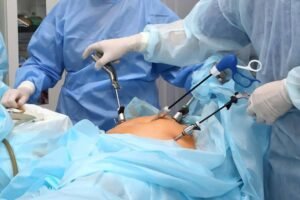
Three to four small cuts are made in the abdomen. The surgeon uses a camera and thin instruments to repair the hernia from the inside.
Robotic Surgery for Hernia
Similar to laparoscopic, but the surgeon controls robotic arms for greater precision. Especially useful for recurrent or unusually positioned hernias. Read more about robotic GI surgery in Delhi and when it’s the right choice.
The use of mesh has improved hernia surgery. A landmark study in JAMA found that mesh-based repairs cut the risk of recurrence almost in half compared to suture-only repairs.
For most patients in Delhi, laparoscopic mesh repair is now the preferred option. It’s part of the broader category of minimally invasive surgical techniques that have become the standard for abdominal procedures.
What Does Recovery After Hernia Surgery Look Like?
Most patients undergoing laparoscopic hernia repair go home the same day or the next. Light walking starts within hours of surgery. You can return to desk work within a week and to normal physical activity in two to three weeks. Open surgery recovery is slower, usually four to six weeks. Heavy lifting should be avoided for at least six weeks regardless of the technique used.
Recurrence rates with modern mesh repair are low. The risk of an inguinal hernia coming back after surgery is around 3 to 5%, though it’s higher for ventral and incisional hernias.
Common things to expect in the first two weeks: mild bruising near the incisions, soreness when coughing or laughing, occasional swelling, and some fatigue. Severe pain, fever, or unusual swelling means call your surgeon.
Long-term outcomes are good. Most patients return to full activity, including sport, within six to eight weeks.
Why Choose Dr. Deep Goel for Hernia Treatment in Delhi?
Choosing the right surgeon shapes everything: the type of repair you get, the length of your recovery, and your risk of recurrence.
Dr. Deep Goel is one of the most experienced laparoscopic and minimally invasive surgeons in Delhi. With over 27 years of clinical practice and 10,000+ surgeries to his name, he combines surgical precision with a patient-first approach that has earned him strong patient trust.
What sets him apart:
- 27+ years of experience in gastrointestinal and minimally invasive surgery
- 10,000+ successful surgeries, including complex and recurrent hernia repairs
- Expertise in laparoscopic and robotic-assisted hernia repair (hernioplasty)
- International training across leading centers in the UK, USA, and France
- Currently, Principal Director and HOD of Surgical Gastroenterology at BLK-Max Super Specialty Hospital, New Delhi
- Patient-focused approach with personalised surgical planning
A patient of Dr. Goel shared, “My father was diagnosed with an inguinal hernia, and we decided to get it repaired. The surgery was done by Dr. Deep Goel, and I was honestly anxious going in. The team explained everything, the procedure was smooth, and recovery was much faster than we expected.” Read more patient success stories to see how Dr. Goel has helped people across Delhi find relief.
Take the First Step Towards a Hernia-Free Life
A hernia won’t fix itself, and waiting only makes it harder to treat. The earlier you act, the simpler the surgery and the smoother the recovery.
If you’ve noticed a bulge, ongoing groin or abdominal discomfort, or unexplained heaviness, it’s worth getting checked. A short consultation can tell you exactly where you stand and what your options are.
With advanced laparoscopic and robotic facilities, experienced surgical teams, and personalised care plans, hernia treatment in Delhi has never been more effective.
👉 Book a hernia consultation with Dr. Deep Goel today and get expert guidance on the right treatment plan for you.
Take charge of your health. The sooner you act, the easier the path forward.

Dr. Deep Goel’s Medical Content Team
Dr. Deep Goel’s medical content team specialises in creating accurate, clear, and patient-focused healthcare content. With strong clinical understanding and expertise in technical writing and SEO, the team translates complex medical information into reliable, accessible resources that support informed decisions and uphold Dr. Goel’s commitment to quality care.
This content is reviewed by Dr. Deep Goel
Related Conditions

Related Blogs
लेप्रोस्कोपिक सर्जरी (Laparoscopic Surgery) क्या है? फायदे, प्रक्रिया, खर्च और रिकवरी की पूरी जानकारी
क्या आपके डॉक्टर ने आपको लेप्रोस्कोपिक सर्जरी (Laparoscopic Surgery) कराने की सलाह दी है? यदि…
Read Article →
Hernia Surgery Recovery Timeline: What to Expect, Week by Week
Google says two weeks. Your neighbor says four. Your body might say something else entirely.…
Read Article →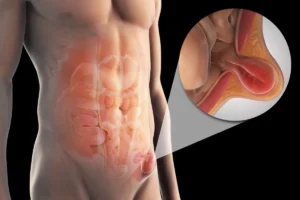
Hernia Symptoms You Shouldn’t Ignore: A Guide to Early Detection and Care
A hernia often begins with a minor sign, perhaps a soft bulge in the abdomen…
Read Article → WhatsApp