
Laparoscopic Gallbladder Surgery in Delhi
Laparoscopic gallbladder surgery (laparoscopic cholecystectomy) is a minimally invasive, standard treatment for symptomatic gallstones and gallbladder inflammation. It is performed through 3-4 small incisions, typically completed in 45-60 minutes, with most patients discharged within 24 hours.
The procedure offers a safe, effective solution with less pain, minimal scarring, and a quicker recovery, usually allowing return to normal activities within 1-2 weeks compared to traditional open surgery.
Reach Out for Expert Care
Introduction
You know that sharp, cramping pain under your right ribcage that hits after a heavy meal. Sometimes it wakes you at 2 am. Sometimes it sends you straight to the emergency room. If that sounds familiar, there’s a good chance gallstones are behind it.
Gallstone disease affects approximately 4% of people in India, and in North India, that figure is closer to 6.2%. For patients experiencing recurring symptoms, the good news is clear: a well-established, minimally invasive solution exists. It’s called laparoscopic cholecystectomy, and it’s the surgical standard of care worldwide.
With over 27 years of experience and more than 10,000 surgeries performed, Dr. Deep Goel has treated hundreds of patients dealing with gallbladder pain in Delhi at BLK-Max Super Speciality Hospital.
On this page, we will walk you through everything you need to know before making a decision.
What Is Laparoscopic Gallbladder Surgery?
The gallbladder is a small, pear-shaped organ just under your liver. Its function is to store bile, a fluid your liver produces to help digest fats. When bile becomes too concentrated, solid particles called gallstones can form inside it.
When gallstones block the bile duct or cause inflammation (a condition called cholecystitis), the pain can be severe. Medication doesn’t dissolve gallstones reliably, which is why surgery is the definitive answer for symptomatic patients.
In a laparoscopic cholecystectomy, the gallbladder is removed through 3-4 small cuts in the abdomen, using a thin camera called a laparoscope. Compared to traditional open surgery, which requires a large incision and a hospital stay of several days, the laparoscopic approach has transformed outcomes. A major Indian multicentre study by the Indian Association of Gastrointestinal Endoscopic Surgeons (IAGES), covering 6,666 patients across 125 hospitals, found that 95% of laparoscopic procedures were completed fully without needing conversion to open surgery.
Who Needs Laparoscopic Gallbladder Surgery?
If you have symptomatic gallstones, recurring pain after fatty meals, cholecystitis (gallbladder inflammation), or gallstone pancreatitis, you may need gallbladder surgery. Patients without symptoms generally don’t need surgery unless specific risk factors are present. An ultrasound and a consultation are the first steps to knowing for sure.
The most common symptoms to watch out for include:
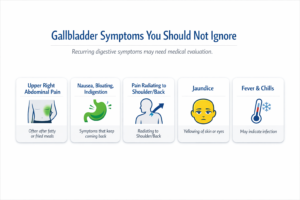
It’s also worth knowing that untreated gallbladder disease can, in some cases, increase the risk of more serious conditions. If you’ve been told you have chronic inflammation or polyps, you can read about gallbladder cancer and its treatment as well.
What Happens During Laparoscopic Gallbladder Removal?
The surgery uses 3-4 small cuts in the abdomen. A tiny camera (laparoscope) is inserted to guide the surgeon. The gallbladder is carefully separated from its attachments and removed through one incision. The procedure takes around 45-60 minutes under general anaesthesia.
Here’s what the process actually looks like, step by step:
- Anaesthesia
You will be asleep during the procedure and won’t feel any pain.
- Small cuts:
The surgeon makes 3-4 tiny cuts on your abdomen to insert a camera and instruments.
- Creating space:
A small amount of gas is used to gently expand the abdomen so the surgeon can see clearly.
- Removing the gallbladder:
The gallbladder is carefully separated and removed through one of the small cuts.
- Closing the cuts:
The cuts are closed with stitches. They are small and usually heal with minimal marks.
In experienced hands, conversion to open surgery is uncommon. Dr. Deep Goel’s approach as a minimally invasive surgeon is to plan carefully before operating, so that surprises during surgery are rare.
What Are the Benefits of Laparoscopic Surgery Over Open Surgery?
Laparoscopic gallbladder surgery means smaller cuts, less pain, a shorter hospital stay (typically 1 day vs. 5+ days for open surgery), a faster return to work, and lower infection risk. For most patients with gallstone disease, it’s the safer and more comfortable option.
| Factor | Laparoscopic | Open Surgery |
|---|---|---|
| Hospital Stay | 1 day (often same-day) | 3–5 days |
| Recovery Time | 1–2 weeks | 4–6 weeks |
| Post-op Pain | Mild | Moderate to significant |
| Scarring | 3-4 tiny marks | One large scar |
| Infection Risk | Lower | Higher |
| Return to Work | 7–10 days (desk job) | 4–6 weeks |
Since the early 1990s, laparoscopic cholecystectomy has been the standard of care globally, as confirmed by the NCBI StatPearls clinical reference. Generally, patients who choose laparoscopic surgery are back on their feet far sooner and with significantly less discomfort than they anticipated.
What Are the Risks? Is It Safe?
Laparoscopic gallbladder surgery is one of the most thoroughly studied operations in India. According to the IAGES multicenter study (293 surgeons, 125 hospitals), the 30-day mortality rate was just 0.2%, and the bile duct injury rate was 0.3%. In the right hands, this is a safe, predictable procedure.
That said, every surgery carries some risk. The most common things patients notice after laparoscopic cholecystectomy include:
- Shoulder tip pain: This comes from the CO₂ gas irritating the diaphragm. It settles within 24-48 hours.
- Port-site soreness: Mild tenderness around the small incisions for a few days.
- Temporary digestive changes: Some patients notice looser stools or bloating in the first 2-4 weeks.
Serious complications like bile duct injury, bleeding, or infection are uncommon but real. That’s why surgical experience matters. Research from PMC (Toppo et al., 2024) confirms that surgeon experience is one of the strongest predictors of a difficult vs. smooth procedure. With over 27 years of experience in GI and laparoscopic surgery, Dr. Deep Goel pays careful attention to anatomical detail and early recognition of any difficulties.
Contact Dr. Deep Goel immediately if you notice: yellowing of the skin or eyes, high fever, worsening abdominal pain, or discharge from an incision site. These are warning signs that need prompt attention.
Reach Out for Expert Care
What to Expect After Surgery: Recovery Timeline
Recovery from laparoscopic gallbladder surgery is generally smooth and predictable. Here’s a realistic timeline:
- Day 1: Most patients go home the same day or after one overnight stay. Expect some grogginess from the anaesthesia and mild soreness.
- Days 2-5: Rest at home. Walking short distances is encouraged. Avoid heavy lifting. Diet: Start with light, low-fat foods.
- Week 1-2: Most patients with desk jobs return to work. Driving is usually fine by Day 7. Energy levels improve steadily.
- Week 3-4: Most people feel fully recovered. Physical restrictions are lifted. A normal diet is usually well-tolerated.
On diet: after gallbladder removal, bile flows directly from the liver into the small intestine rather than being stored. In the first few weeks, your digestive system needs time to adjust. Stick to smaller, lower-fat meals. Avoid deep-fried, very spicy, or heavy food initially. Most patients adapt comfortably within 3-4 weeks.
For more recovery questions, visit the patient FAQs page.
Will I Be Able to Live Normally Without a Gallbladder?
This is one of the questions patients often ask before surgery, and the answer is reassuring. A review of Indian laparoscopic cholecystectomy outcomes found that quality of life was rated good to excellent in more than 90% of patients after the procedure. The body adapts, digestion normalises, and the gallstone pain is gone permanently.
Some patients notice that very fatty meals initially cause loose stools. This usually settles within 3-4 weeks as the body adjusts. Long-term, the success rate of laparoscopic cholecystectomy for symptom relief is high. You won’t need to follow a lifelong restricted diet in most cases.
If you’re also concerned about complex hepatobiliary issues or liver conditions, read about liver surgery (hepatectomy) in Delhi as well.
Ready to Get Rid of Your Gallstone Pain?
Laparoscopic gallbladder surgery is well-understood, low-risk, and fast to recover from when performed by a surgeon with the right experience. If you’ve been putting off a consultation because you’re unsure or anxious, you should know that the vast majority of patients wish they’d done it sooner.
Dr. Deep Goel has been performing minimally invasive gallbladder surgery in Delhi for over 27 years, with more than 10,000 procedures.
If gallstone pain is affecting your quality of life, don’t wait for it to get worse. Book a consultation with Dr. Deep Goel at BLK-Max Super Speciality Hospital, Pusa Road, New Delhi.
You can reach us at +91 9810119798, or use the contact form on this page.

Dr. Deep Goel’s Medical Content Team
Dr. Deep Goel’s medical content team specialises in creating accurate, clear, and patient-focused healthcare content. With strong clinical understanding and expertise in technical writing and SEO, the team translates complex medical information into reliable, accessible resources that support informed decisions and uphold Dr. Goel’s commitment to quality care.
This content is reviewed by Dr. Deep Goel

Related Blogs

Gallbladder Stone Symptoms in Women: Is Bloating and Gas a Sign?
Bloating and gas are easy to blame on something you ate, but if they keep…
Read Article →
Hernia Surgery Recovery Timeline: What to Expect, Week by Week
Google says two weeks. Your neighbor says four. Your body might say something else entirely.…
Read Article →
 WhatsApp