
GIST Surgery in Delhi: Laparoscopic Removal, Recovery & Cost
Gastrointestinal stromal tumours (GISTs) are uncommon tumours that develop in the digestive tract, most frequently in the stomach or small intestine. Surgery is the main treatment for many localised GISTs, with the aim of removing the tumour completely while preserving as much normal organ function as possible.
GIST surgery in Delhi may involve laparoscopic or open tumour removal, depending on the tumour’s size, location and complexity. Dr. Deep Goel evaluates these factors to help determine an appropriate surgical approach for each patient.
Reach Out for Expert Care
What Is GIST Surgery?
GIST surgery involves removing a gastrointestinal stromal tumour from the digestive tract. For localised tumours that can be safely removed, surgery generally aims for complete resection without rupturing the tumour.
The procedure may involve removing the tumour with a small portion of the stomach or intestine, depending on where it develops. The objective is to achieve adequate tumour clearance while avoiding unnecessary removal of healthy tissue.
Unlike many other gastrointestinal cancers, GIST does not usually require routine removal of nearby lymph nodes unless there is a specific clinical reason.
When Is GIST Surgery Recommended?
Surgery may be recommended when a GIST can be removed safely and the potential benefits of the operation outweigh its risks.
The treatment plan depends on:
- Tumour size and location within the digestive tract.
- Whether the tumour is localised or has spread.
- Its relationship with nearby organs and blood vessels.
- Imaging findings and biopsy or pathology results.
- The patient’s general health and fitness for surgery.
Some very small GISTs may be suitable for active surveillance following specialist assessment. For larger or strategically located tumours, targeted therapy before surgery may be considered to shrink the tumour and make removal safer or help preserve organ function.
For advanced or metastatic GIST, medication is often the main treatment. Surgery may be considered in selected cases following multidisciplinary evaluation.
Types of GIST Surgery
The surgical approach is selected according to the tumour’s characteristics and the goal of safe, complete removal.
1. Laparoscopic GIST Surgery
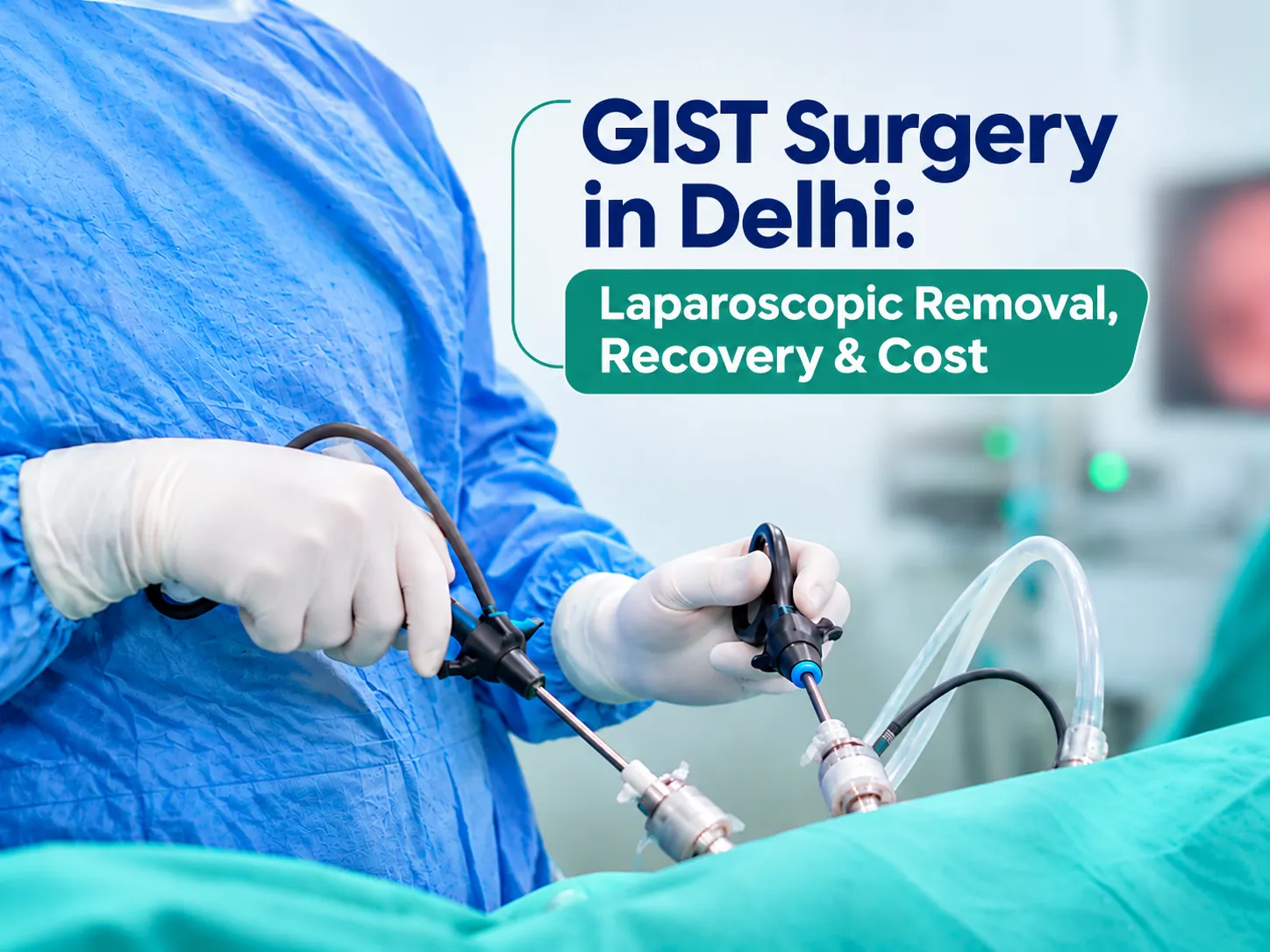
Laparoscopic GIST surgery is a minimally invasive technique performed through small abdominal incisions using a camera and specialised instruments.
It may be suitable for smaller tumours in favourable anatomical locations, particularly certain tumours arising in the stomach. Potential benefits include smaller incisions, less postoperative discomfort and a shorter hospital stay compared with open surgery in appropriately selected patients.
However, laparoscopic surgery is not suitable for every GIST. The surgeon must be confident that the tumour can be removed safely without rupture.
Learn more about – Laparoscopic surgery
2. Open GIST Surgery
Open surgery involves a larger incision that allows direct access to the tumour. It may be preferred for larger tumours, complex locations or cases in which a minimally invasive approach could increase the risk of tumour damage.
The choice between laparoscopic and open surgery depends on oncological safety rather than incision size alone.
3. Organ-Preserving Tumour Removal
Whenever appropriate, the surgical plan aims to remove the tumour while preserving as much healthy tissue and normal organ function as possible.
Depending on the tumour’s location, this may involve a wedge resection of the stomach or removal of a segment of the small intestine. More extensive surgery may be required for selected complex tumours.
How Is GIST Surgery Performed?
The exact procedure varies according to the tumour’s location, size and relationship with surrounding structures.
The surgical process generally involves:
- Preoperative assessment: Imaging, relevant investigations and review of the diagnosis help determine the surgical plan.
- Anaesthesia: The procedure is usually performed under general anaesthesia.
- Tumour removal: The surgeon removes the tumour using the selected laparoscopic or open approach.
- Specimen examination: The removed tissue is sent for pathological examination to confirm the diagnosis and assess important features, including tumour size and mitotic activity.
- Postoperative monitoring: The patient is monitored for pain control, recovery of digestive function and potential complications.
An important surgical principle is to avoid tumour rupture, which is associated with a higher risk of recurrence. The need for additional treatment is assessed after considering the pathology report and the patient’s overall clinical findings.
Recovery After GIST Surgery
Recovery after GIST surgery varies according to the surgical technique, the extent of tissue removal and the patient’s general health.
What to Expect After Surgery
During the initial recovery period, the care team monitors pain, wound healing, digestive function and the ability to eat and drink. Patients are usually encouraged to begin moving as soon as it is medically appropriate.
Diet is advanced according to the procedure performed and the patient’s tolerance. Activity should increase gradually, following the treating surgeon’s instructions.
How Long Does Recovery Take?
Recovery may be quicker after an uncomplicated laparoscopic procedure than after open surgery. However, there is no single recovery timeline that applies to every patient.
The time needed to resume work, exercise and other everyday activities depends on the extent of surgery, the patient’s progress and any complications. Follow-up appointments help assess healing and guide the return to normal activities.
Follow-Up After GIST Surgery
Surgical removal does not eliminate the need for ongoing monitoring. The risk of recurrence depends on factors such as tumour size, location, mitotic activity and whether tumour rupture occurred.
Some patients, particularly those with a higher risk of recurrence and a tumour sensitive to the medication, may be advised to take targeted therapy such as imatinib after surgery. Follow-up imaging and treatment decisions are individualised.
Risks and Possible Complications of GIST Surgery
As with other major operations, GIST surgery carries potential risks. These may include:
- Bleeding or infection.
- Pain and delayed wound healing.
- Leakage from a surgical connection, if one is created.
- Temporary digestive difficulties.
- Complications related to anaesthesia.
- Tumour rupture or incomplete removal in complex cases.
The likelihood of complications depends on the tumour and the procedure. A preoperative consultation helps patients understand the expected benefits, limitations and risks of their proposed operation.
Reach Out for Expert Care
GIST Surgery Cost in Delhi NCR
The cost of GIST surgery in Delhi NCR typically ranges from ₹2.1 lakh to ₹4 lakh, depending on the tumour’s size, location, surgical approach and hospital facilities. The final cost may vary according to the patient’s condition and treatment requirements.
Key factors affecting the cost include:
- Type of surgery: Laparoscopic and open procedures may have different costs.
- Tumour complexity: The extent of tissue removal and any additional surgical requirements can affect the estimate.
- Hospital stay: Room category, length of admission and intensive care requirements, if needed.
- Diagnostic investigations: Imaging, biopsy, pathology and molecular testing where indicated.
- Postoperative care: Medicines, follow-up appointments and treatment required after surgery.
- Additional treatment: Targeted therapy may add to the overall cost of GIST management.
A personalised estimate should be obtained after reviewing the patient’s investigations and proposed treatment plan. The cost of surgery may not include all subsequent medicines, surveillance imaging or additional treatment.
Why Consult Dr. Deep Goel for GIST Surgery in Delhi?
GIST surgery requires careful planning because tumour location, size and the risk of rupture can influence the procedure and long-term management.
Dr. Deep Goel is a gastrointestinal and surgical oncology specialist with 27+ years of experience based in Delhi NCR. Patients considering GIST surgery can discuss their diagnostic findings, surgical options, expected recovery and the possibility of additional treatment during a consultation.
The recommended approach should be based on an individual clinical assessment and, where appropriate, multidisciplinary review.
Final Thoughts
GIST surgery is an important treatment option for patients with localised gastrointestinal stromal tumours. Choosing the right surgical approach, whether laparoscopic or open, depends on the tumour’s size, location and complexity, with the priority being complete tumour removal while preserving healthy tissue and avoiding tumour rupture.
If you are considering GIST surgery in Delhi, consulting an experienced surgical oncology specialist can help you understand your treatment options, expected recovery, potential risks and overall cost. Dr. Deep Goel provides individualised evaluation and surgical planning to help patients make informed decisions about their treatment and long-term follow-up.
Sources
- Judson I, Jones RL, Wong NACS, et al. Gastrointestinal stromal tumour (GIST): British Sarcoma Group clinical practice guidelines. British Journal of Cancer.
- Cicala CM, Bauer S, Heinrich MC, Serrano C. Gastrointestinal Stromal Tumor: Current Approaches and Future Directions in the Treatment of Advanced Disease. Hematology/Oncology Clinics of North America.
- Serrano C, et al. 2023 GEIS Guidelines for gastrointestinal stromal tumors. Therapeutic Advances in Medical Oncology.
- Updated Asian consensus guidelines for the diagnosis and management of gastrointestinal stromal tumor (2025). Gastric Cancer. Published in 2026.
- Japanese Society of Clinical Oncology. English version of Japanese Clinical Practice Guidelines 2022 for gastrointestinal stromal tumor (GIST). International Journal of Clinical Oncology. Published online in 2024.

Dr. Deep Goel’s Medical Content Team
Dr. Deep Goel’s medical content team specialises in creating accurate, clear, and patient-focused healthcare content. With strong clinical understanding and expertise in technical writing and SEO, the team translates complex medical information into reliable, accessible resources that support informed decisions and uphold Dr. Goel’s commitment to quality care.
This content is reviewed by Dr. Deep Goel
 WhatsApp