
How Is Stomach Cancer Diagnosed? Endoscopy, Biopsy, CT and Costs in Delhi
Persistent indigestion, stomach discomfort or unexplained weight loss can leave you guessing whether something more serious is happening with your body. Although these symptoms often have non-cancerous causes, concerning symptoms should not be ignored.
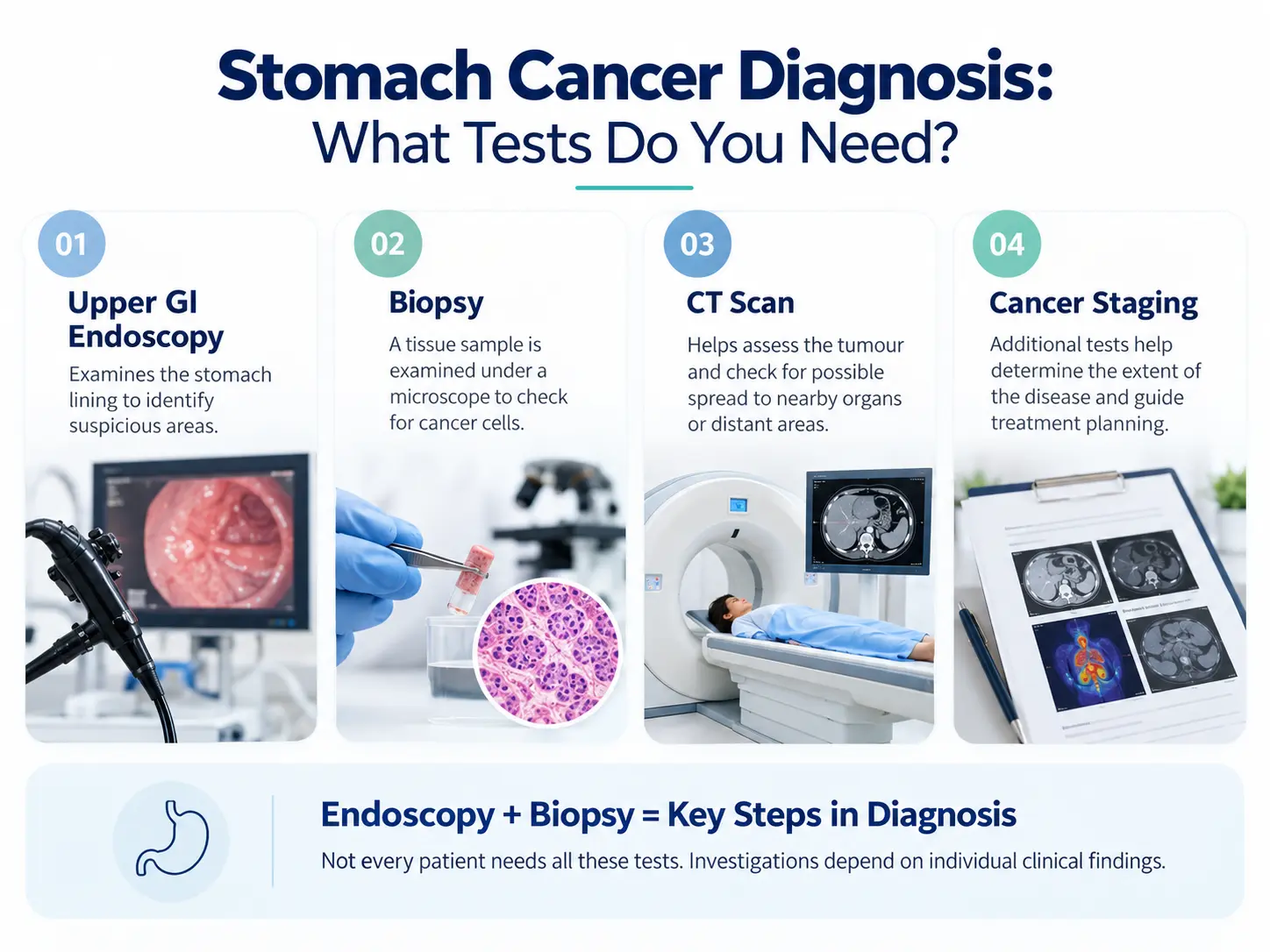
Stomach cancer is usually diagnosed through an upper GI endoscopy with a biopsy. Endoscopy helps GI oncologists examine the stomach lining, while a biopsy confirms whether suspicious tissue contains cancer cells. CT scans and other tests may then help determine the extent of the disease.
If you are considering stomach cancer diagnosis in Delhi, understanding these tests can help you prepare for the next steps.
Reach Out for Expert Care
How Is Stomach Cancer Diagnosed?
Doctors diagnose stomach cancer by reviewing symptoms, examining the patient and recommending appropriate investigations. The process may include blood tests, upper GI endoscopy, biopsy and imaging scans.
The tests serve different purposes. Endoscopy identifies suspicious areas, biopsy helps confirm the diagnosis, and imaging helps assess whether the cancer may have spread.
Can Endoscopy Detect Stomach Cancer?
Yes. Upper GI endoscopy is one of the main tests used to investigate suspected stomach cancer.
During the procedure, a doctor passes a thin, flexible tube with a camera through the mouth into the stomach. This allows the doctor to examine the stomach lining for abnormalities such as ulcers, irregular tissue or suspicious growths.
If an abnormal area is found, the doctor can collect a small tissue sample for biopsy during the same procedure.
Endoscopy can identify suspicious lesions, but their appearance alone cannot confirm cancer. A biopsy is generally needed to establish the diagnosis.
What Test Confirms Stomach Cancer?
A biopsy examined under a microscope is generally used to confirm stomach cancer.
The tissue sample is usually collected during an endoscopy and sent to a pathology laboratory. A pathologist examines it for cancer cells and determines the type of abnormality.
If the biopsy confirms cancer, additional tests may be recommended to understand the tumour’s characteristics and determine the appropriate treatment.
Sometimes, the initial sample does not provide a definitive result. Depending on the findings, the doctor may recommend repeat sampling or further investigation.
The time required for a biopsy report varies by laboratory and whether additional testing is needed.
Can a CT Scan Detect Stomach Cancer?
Yes. A CT scan can identify many stomach tumours and help doctors assess whether the disease may have spread to nearby structures or distant organs.
A contrast-enhanced CT scan may be used to examine the abdomen and other areas, depending on the clinical situation. It can provide information about the tumour, suspicious lymph nodes and possible involvement of organs such as the liver.
However, a CT scan does not replace endoscopy and biopsy for confirming most suspected stomach cancers. Small or early abnormalities may not be clearly visible on a scan.
If symptoms or other findings remain concerning despite a normal CT scan, the doctor may still recommend an endoscopy.
Are Other Tests Needed After Diagnosis?
Once stomach cancer is confirmed, doctors may recommend additional investigations to determine its stage. This process helps establish how far the cancer has progressed and guides treatment planning.
Depending on the case, these investigations may include:
- Blood tests: Assess general health, anaemia and organ function.
- Endoscopic ultrasound: Helps evaluate how deeply a tumour has grown into the stomach wall and whether nearby lymph nodes appear suspicious.
- Additional imaging: Helps assess possible spread.
- Specialised pathology tests: May identify tumour characteristics that influence treatment choices.
Not every patient needs all these investigations. The treating team selects tests according to the biopsy findings and clinical requirements.
To understand the available treatment approaches, read our guide to stomach cancer treatment in Delhi.
What Is the Cost of Stomach Cancer Diagnosis in Delhi?
The average cost of stomach cancer diagnosis in Delhi may range from ₹10,000 to ₹65,000, depending on the tests required, including endoscopy, biopsy, CT scans and additional investigations.
The main expenses may include:
- Specialist consultation
- Upper GI endoscopy
- Biopsy and pathology examination
- CT scan with or without contrast
- Additional staging investigations
The total cost can vary considerably because some patients require only a few investigations, while others need more extensive testing.
When comparing prices, ask whether the quoted amount includes sedation, biopsy, pathology charges and follow-up consultation. CT scan costs may also vary depending on the body region examined and whether contrast material is required.
For an accurate estimate, request an itemised quotation from the hospital or diagnostic centre. Diagnostic costs are separate from the expenses associated with surgery, chemotherapy or other cancer treatments.
When Should You Consult a Stomach Cancer Specialist?
Persistent indigestion, unexplained weight loss, reduced appetite, difficulty swallowing or ongoing upper abdominal discomfort should be medically evaluated, particularly if symptoms worsen or recur.
These symptoms do not necessarily indicate cancer. However, unexplained anaemia, black stools or vomiting blood may require urgent medical attention.
If you have already undergone an endoscopy, biopsy or CT scan, take the reports to your consultation. A specialist can review the findings and determine whether further investigations are needed.
Dr. Deep Goel, Vice Chairman and Head of Surgical Gastroenterology, GI Cancer, Bariatric and Minimally Invasive Surgery at BLK-Max Super Speciality Hospital, Delhi, evaluates patients with gastrointestinal conditions, including stomach cancer.
Patients can explore stomach cancer and other condition treatment options to learn more about available treatments and the next steps after diagnosis.
Final Takeaway
Stomach cancer diagnosis usually begins with an assessment of symptoms and may involve endoscopy, biopsy and imaging tests. A biopsy generally confirms the diagnosis, while CT scans help assess the extent of the disease.
If you have persistent symptoms or concerning investigation results, seek medical advice rather than relying on symptoms or scans alone. Timely evaluation can help clarify the diagnosis and guide appropriate care.
Medical disclaimer: This article is for educational purposes and does not replace professional medical advice, diagnosis or treatment.
Sources:
- National Cancer Institute – Stomach Cancer Diagnosis and Tests.
- American Cancer Society – Tests for Stomach Cancer.
- NHS – Stomach Cancer: Tests and Next Steps.

 WhatsApp