
White Mucus in Stool: Causes, What It Means & When to See a Doctor
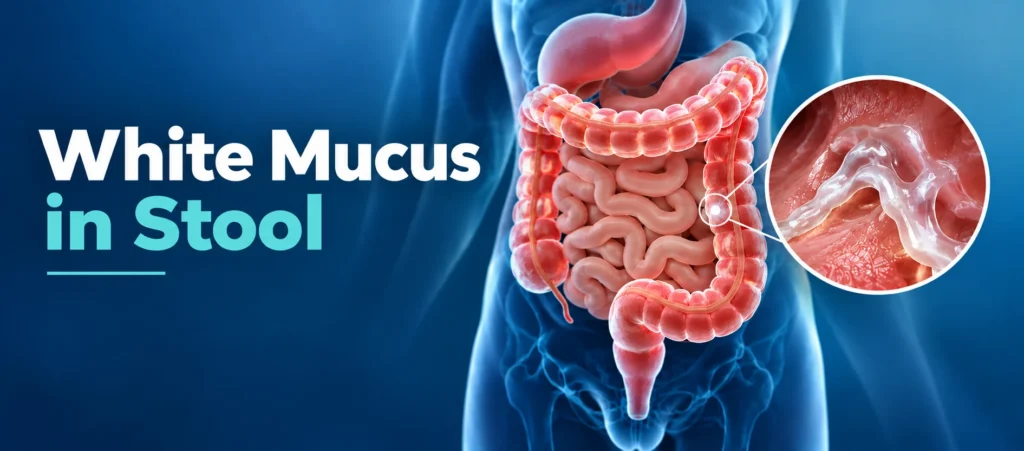
Have you noticed a white, clear or jelly-like substance in your stool and wondered, “Is this normal?”
Seeing mucus in stool can be unsettling. But before you panic, it is important to know that your intestines naturally produce mucus. A small amount usually goes unnoticed and helps lubricate the bowel and allow stool to pass smoothly.
However, if you are repeatedly noticing white mucus in stool, especially along with abdominal pain, diarrhoea, constipation, blood in the stool or a change in your usual bowel habits, it is worth understanding what your body may be telling you.
So, what causes white mucus in stool, and when should you see a doctor?
Reach Out for Expert Care
What Does White Mucus in Stool Mean?
Mucus is a slippery, jelly-like substance produced by the lining of the intestines. It protects the intestinal wall and helps stool move through the digestive tract.
Normally, there is so little mucus that you never notice it. But when the bowel becomes irritated or inflamed, mucus production can increase, making it visible on or around the stool. Mucus may appear clear, white or yellowish.
The important thing is that mucus itself is a symptom, not a diagnosis. Its significance depends on how frequently it occurs and whether you have other symptoms.
Mucus in the stool is a symptom, not a diagnosis. It can occur with relatively common digestive problems, but persistent or unexplained changes in bowel habits should be evaluated in the right clinical context, states Dr. Deep Goel.
Is White Mucus in Stool Normal?
Occasionally seeing a small amount of mucus does not necessarily mean something is wrong.
Your bowel naturally produces mucus every day, and a small amount may be present in a normal bowel movement.
The situation deserves more attention when mucus becomes frequent, excessive or persistent, particularly if you also experience:
- Abdominal pain or cramps
- Persistent diarrhoea
- Constipation
- Blood in stool
- Bloating
- Urgency to pass stool
- Unexplained weight loss
- A persistent change in bowel habits
In these situations, rather than guessing the cause yourself, it is better to have a doctor evaluate the symptoms.
Common Causes of White Mucus in Stool
There are several possible explanations for visible mucus in stool.
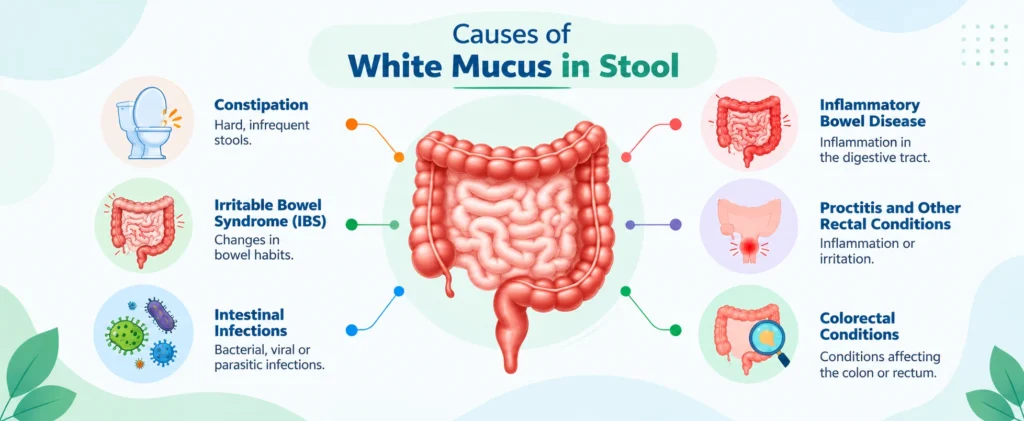
1. Constipation
When stool becomes difficult to pass, the bowel can become irritated and produce more mucus.
Constipation may also cause:
- Hard or lumpy stools
- Straining during bowel movements
- Bloating
- A feeling of incomplete bowel evacuation
If constipation keeps returning, it is important to understand what is causing it rather than repeatedly treating the symptom.
2. Irritable Bowel Syndrome (IBS)
Irritable bowel syndrome (IBS) is a common digestive condition associated with abdominal discomfort and changes in bowel habits.
People with IBS may experience constipation, diarrhoea or alternating episodes of both. Some may also notice whitish or clear mucus in their stool.
However, persistent or new symptoms should not automatically be attributed to IBS without appropriate evaluation.
3. Intestinal Infections
Bacterial, viral or parasitic infections can irritate the intestinal lining and cause increased mucus production.
In such cases, mucus may appear with:
- Diarrhoea
- Abdominal cramps
- Fever
- Nausea or vomiting
- An increased urge to pass stool
The appropriate treatment depends on the underlying infection.
4. Inflammatory Bowel Disease
Conditions such as ulcerative colitis and Crohn’s disease cause inflammation in the digestive tract and can lead to mucus in stool.
Other symptoms may include persistent diarrhoea, abdominal pain, urgency, blood in stool and unexplained weight loss.
If these symptoms continue, a gastrointestinal evaluation is important.
5. Proctitis and Other Rectal Conditions
Proctitis, or inflammation of the rectum, can cause mucus discharge, rectal discomfort, urgency, and sometimes bleeding.
Other conditions affecting the colon and rectum can also result in visible mucus.
This is why persistent mucus should be considered alongside your other symptoms rather than treated as a condition on its own.
6. Colorectal Conditions
Mucus can occasionally occur with conditions affecting the colon or rectum, including colorectal cancer.
However, white mucus in stool alone does not mean you have cancer. Much more common conditions, including IBS, infections and bowel irritation, can also cause mucus.
The concern increases when mucus occurs together with warning signs such as blood in stool, unexplained weight loss or a persistent change in bowel habits.
If you want to understand the warning signs and importance of early evaluation, read Dr. Goel’s detailed guide to Colon Cancer Treatment in Delhi.
White Mucus in Stool vs White Stool: What’s the Difference?
This is an important distinction. If you see white or clear jelly-like material on or around normally coloured stool, it may be mucus.
But if your entire stool is repeatedly pale, grey, clay-coloured or almost white, that is a different concern and may require evaluation for problems affecting bile flow.
So, don’t confuse white mucus in stool with white or clay-coloured stool.
If the stool itself repeatedly becomes unusually pale, particularly with other symptoms such as jaundice, dark urine or abdominal pain, seek medical advice.
When Should You See a Doctor for White Mucus in Stool?
A one-time episode without other symptoms may not be concerning. But it is advisable to consult a doctor if mucus:
- Keeps appearing
- Is increasing in quantity
- Is accompanied by blood
- Occurs with persistent diarrhoea
- Occurs with ongoing constipation
- Is associated with abdominal pain
- Appears with unexplained weight loss
- Occurs with a persistent change in bowel habits
These symptoms do not necessarily mean something serious, but they should not be ignored.
Dr. Deep Goel explains, “What matters is not simply the presence of mucus, but the pattern around it, how long it has been happening, whether your bowel habits have changed, and whether there are symptoms such as bleeding, pain or unexplained weight loss.”
How Is the Cause of Mucus in Stool Diagnosed?
Diagnosis starts with understanding your symptoms, bowel habits, medical history and risk factors.
Depending on what your doctor finds, investigations may include:
- Blood tests
- Stool tests
- Tests for infection or inflammation
- Imaging studies
- Colonoscopy
- Other endoscopic investigations
A colonoscopy is not automatically required just because you notice mucus. The need for further testing depends on your symptoms and individual risk factors.
If further colorectal evaluation is required, Dr. Goel provides advanced colorectal surgical care in Delhi. Learn more about Colorectal Surgery in Delhi.
How Is White Mucus in Stool Treated?
There is no single treatment for mucus in stool because the treatment depends on the underlying cause.
For example, constipation may require changes in diet, fluid intake and bowel habits. An intestinal infection may require specific treatment, while IBS and inflammatory bowel disease require a more individualised approach.
The goal is not simply to stop the mucus; it is to identify and manage why it is occurring.
The Bottom Line
White mucus in stool is not always a cause for concern, but persistent mucus should not be ignored.
Constipation, IBS and temporary intestinal infections are among the possible causes, while persistent mucus with bleeding, abdominal pain, weight loss or significant bowel changes may require further investigation.
The key is to look beyond the mucus itself and understand the overall pattern of your digestive symptoms.
If you have ongoing or unexplained changes in your bowel movements, consulting an experienced gastrointestinal specialist can help identify the cause and determine whether further evaluation is necessary.
If mucus in stool persists or occurs with pain, bleeding, weight loss, or bowel changes, it is best to seek expert evaluation. Consult Dr. Deep Goel for personalised guidance. Call +91 98101 19798 or Book an Appointment.
Disclaimer: This article is intended for general health information and does not replace an individual medical consultation, diagnosis or treatment plan.

 WhatsApp