
What to Eat After Gallbladder Surgery: 4-Week Indian Diet Plan
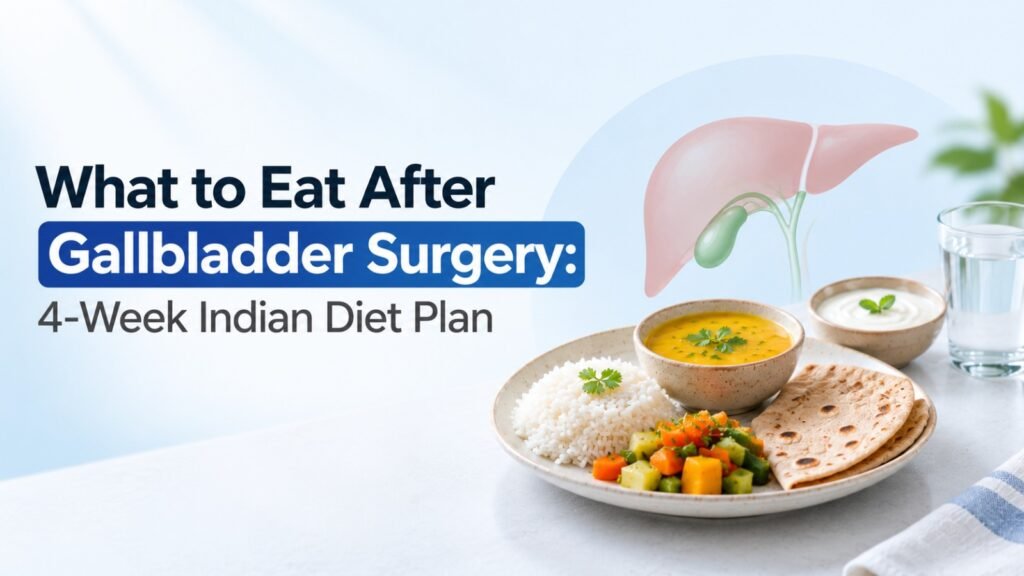
Recovering from gallbladder surgery can raise many questions about food. Can you eat roti? Is dal safe? When can you return to your regular Indian meals? Knowing what to eat after gallbladder surgery can help you manage digestive discomfort and return to your usual routine gradually.
After gallbladder removal, your liver continues to produce bile, which helps digest fat. However, bile no longer collects in the gallbladder before reaching the intestine. Some people experience bloating, gas or loose stools, especially after fatty meals.
A simple, balanced diet with smaller meals can help during recovery. This four-week Indian diet plan offers general guidance on choosing foods after surgery.
Your surgeon’s instructions should always take priority.
Reach Out for Expert Care
What to Eat After Gallbladder Surgery
During the first few days, choose foods that are easy to digest and relatively low in fat. Eat small portions and increase the variety of foods as your body adjusts.
Suitable options include:
- Grains: Plain rice, soft roti, oats and dalia prepared with little oil.
- Protein: Moong dal, lightly cooked lentils, egg whites, grilled fish or skinless chicken, as tolerated.
- Vegetables: Well-cooked carrots, pumpkin, lauki and other vegetables that suit your digestion.
- Fruits: Bananas, apples and papaya, depending on your tolerance.
- Dairy: Low-fat milk, plain curd and other low-fat dairy products if they do not cause discomfort.
- Fluids: Water, clear soups and other fluids recommended by your care team.
You do not need to avoid every source of fat permanently. The aim is to limit heavy, greasy meals initially and gradually find the amount of fat your body can tolerate.
4-Week Indian Diet Plan After Gallbladder Surgery
Everyone recovers at a different pace. Use this plan as a flexible guide and introduce foods according to your appetite, symptoms and medical advice.
Week 1: Choose Light, Simple Meals
During the first week, focus on small, frequent meals rather than three large meals. Avoid fried foods and rich gravies, which may worsen digestive symptoms.
Sample daily meal plan:
- Breakfast: Plain oats porridge or soft poha with minimal oil.
- Mid-morning: A banana or another fruit you tolerate.
- Lunch: Moong dal khichdi with well-cooked vegetables.
- Evening snack: Plain toast or a small bowl of low-fat curd.
- Dinner: Soft rice, thin dal and cooked lauki or carrots.
Start with small portions and eat slowly. If you feel nauseated or develop discomfort, return to foods you tolerate and contact your healthcare team if symptoms persist.
Week 2: Gradually Add More Variety
If your recovery is progressing well, begin introducing more familiar foods. Continue limiting deep-fried snacks, creamy dishes and meals with excessive oil or ghee.
Sample daily meal plan:
- Breakfast: Vegetable poha or oats with minimal oil.
- Mid-morning: Papaya or an apple.
- Lunch: Two small rotis, moong dal and cooked vegetables.
- Evening snack: Plain low-fat curd or a light homemade snack.
- Dinner: Rice with dal and a small serving of grilled chicken or fish, if preferred.
You can usually try foods such as idli, upma and soft homemade chapati as tolerated. Introduce one new food at a time to identify anything that triggers bloating or loose stools.
Week 3: Build Balanced Indian Meals
By the third week, many people can enjoy a wider variety of foods. Focus on including carbohydrates, protein and vegetables in balanced portions.
Sample daily meal plan:
- Breakfast: Idli with sambar or vegetable upma.
- Mid-morning: A seasonal fruit.
- Lunch: Roti or rice, dal, cooked vegetables and low-fat curd.
- Evening snack: Roasted makhana or a small portion of roasted chana.
- Dinner: Vegetable khichdi or roti with lightly prepared paneer, fish or chicken.
If you are feeling well, gradually increase fibre from fruits, vegetables and whole grains. Increasing fibre too quickly may cause gas, so make changes slowly.
Week 4: Move Towards Your Regular Diet
By the fourth week, many people can gradually return to a varied, balanced diet. You may be able to enjoy most familiar foods, provided they do not trigger symptoms.
Sample daily meal plan:
- Breakfast: Vegetable dalia, poha or a lightly prepared dosa.
- Mid-morning: Fruit or plain low-fat yoghurt.
- Lunch: Roti, dal, vegetables and a protein source.
- Evening snack: Roasted chana or a small homemade snack.
- Dinner: Rice or roti with vegetables and dal, fish or lean chicken.
Continue limiting very oily meals if they cause discomfort. You do not need to follow a strict low-fat diet forever if you recover well, but individual needs can vary.
Foods to Avoid After Gallbladder Surgery
There is no single list of foods that everyone must avoid. However, certain foods can trigger diarrhoea, bloating or abdominal discomfort, particularly during early recovery.
Consider limiting:
- Deep-fried foods such as samosas, pakoras and puris.
- Rich curries, creamy gravies and heavily buttered dishes.
- Large amounts of ghee, butter and cooking oil.
- Fatty meats and processed meats.
- Large meals containing several high-fat foods together.
- Very spicy foods if they worsen your symptoms.
You can gradually test your tolerance instead of permanently eliminating entire food groups.
Tips for Better Digestion After Gallbladder Removal
A few simple habits can make your transition back to regular meals easier.
- Eat smaller meals: Smaller portions may be easier to tolerate than large meals.
- Limit fat per meal: Spread fat intake across the day rather than eating a very fatty meal at once.
- Stay hydrated: Drink water regularly, especially if you have loose stools.
- Increase fibre gradually: Add whole grains, fruits and vegetables slowly.
- Keep a food diary: Record meals and symptoms to identify possible triggers.
- Follow your recovery instructions: Resume normal activities and exercise according to your surgeon’s advice.
If you are planning surgery or want to understand the procedure, read our guide to laparoscopic gallbladder surgery in Delhi. For financial planning, you can also explore the cost of gallbladder surgery in Delhi.
When Should You Contact Your Doctor?
Mild digestive changes can occur after surgery, but some symptoms need medical attention. Contact your surgeon if you experience persistent diarrhoea, ongoing abdominal pain, repeated vomiting or difficulty eating and drinking.
Seek urgent medical care if you develop severe or worsening abdominal pain, fever, yellowing of the skin or eyes, or an inability to keep fluids down.
Do not assume that every digestive symptom is caused by your diet. Your doctor can assess whether further evaluation or treatment is needed.
Final Thoughts
Knowing what to eat after gallbladder surgery can make recovery feel less confusing. Start with simple, low-fat meals, eat smaller portions and gradually reintroduce familiar Indian foods over the following weeks.
Remember that this four-week plan is a general guide, not a fixed medical prescription. Your recovery, symptoms and surgeon’s recommendations should determine how quickly you return to your usual diet. If digestive problems persist, seek medical advice rather than relying on dietary changes alone.

 WhatsApp