
Laparoscopic Cancer Surgery in Delhi
Gastrointestinal (GI) cancers, including cancers of the oesophagus, stomach, liver, pancreas, and colon, require highly specialised surgical management. Over the past decade, laparoscopic cancer surgery in Delhi has emerged as a safe and effective alternative to traditional open surgery, offering reduced pain, shorter hospital stays, and faster recovery.
At BLK-Max Super Speciality Hospital, Delhi, laparoscopic GI cancer surgery is performed under the care of Dr. Deep Goel, a senior GI and HPB surgeon with over 27 years of experience in minimally invasive and advanced cancer surgery.
If you are searching for minimally invasive cancer surgery in Delhi or a trusted surgical oncologist, early consultation can significantly improve outcomes and recovery timelines.
Reach Out for Expert Care
What is Laparoscopic Surgery for GI Cancer?
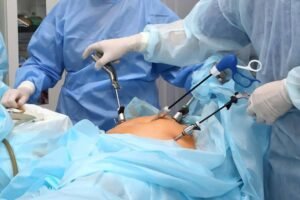
Laparoscopic surgery, also known as keyhole cancer surgery, is a minimally invasive surgical technique used to remove cancerous tumours through small incisions (0.5 –1 cm) instead of large open cuts.
During the procedure:
- A laparoscope (thin camera) is inserted through a small incision
- The surgical area is visualised on a high-definition monitor
- Specialised instruments are used to remove the tumour precisely
This technique allows oncological clearance while minimising trauma to surrounding tissues.
Laparoscopic cancer surgery in Delhi is widely used for selected cases of:
- Stomach cancer
- Colorectal cancer
- Liver tumours
- Pancreatic cancer
- Gallbladder cancer
Laparoscopic Surgery vs Open Cancer Surgery
| Feature | Laparoscopic Surgery | Traditional Open Surgery |
| Incision Size | Small (0.5–1 cm) | Large (10–20 cm) |
| Postoperative Pain | Significantly less | Higher due to a large incision |
| Hospital Stay | 2–4 days | 5–10 days |
| Recovery Time | 2–4 weeks | 6–8 weeks |
| Blood Loss | Reduced | Higher |
| Infection Risk | Lower | Higher |
Minimally invasive cancer surgery offers comparable oncological outcomes with enhanced recovery benefits in suitable patients.
Benefits of Laparoscopic Cancer Surgery in Delhi
Laparoscopic cancer surgery in Delhi offers significant advantages over traditional open surgery, especially for gastrointestinal (GI) cancers. When performed by an experienced surgical oncologist, this minimally invasive approach improves recovery while maintaining oncological safety.
- Minimally Invasive Technique: Small (0.5–1 cm) incisions reduce tissue trauma, postoperative pain, and scarring compared to large open cuts.
- Faster Recovery: Patients usually experience shorter hospital stays, earlier mobilisation, and quicker return to normal activities.
- Reduced Blood Loss & Greater Precision: High-definition magnified visualisation enables precise tumour removal, improved vascular control, and the preservation of healthy tissue.
- Lower Risk of Complications: Smaller incisions reduce the risk of wound infections, hernia formation, and other postoperative complications.
- Earlier Start of Chemotherapy: Faster healing enables the timely initiation of chemotherapy or other adjuvant treatments, which is critical in cancer care.
Types of Laparoscopic GI Cancer Surgeries in Delhi
The choice of laparoscopic GI cancer surgery depends on tumour location, stage, and the patient’s overall fitness. Common minimally invasive cancer procedures include:
1. Laparoscopic Colectomy (Colon Cancer Surgery)
Performed for colorectal cancer, this procedure ensures complete tumour removal along with adequate lymph node dissection while preserving healthy bowel function.
2. Laparoscopic Gastrectomy (Stomach Cancer Surgery)
Partial or total removal of the stomach for gastric cancer using minimally invasive techniques that support faster recovery.
3. Laparoscopic Liver Resection
Used for selected liver tumours and metastatic liver disease, allowing precise tumour removal while preserving maximum healthy liver tissue.
4. Laparoscopic Whipple Surgery (Pancreaticoduodenectomy)
Performed in carefully selected pancreatic cancer cases by experienced GI and HPB surgeons.
5. Laparoscopic Gallbladder Cancer Surgery
Used in early-stage gallbladder malignancies where minimally invasive oncological resection is feasible.
These advanced procedures form part of comprehensive GI cancer treatment in Delhi, delivered through a multidisciplinary oncology approach focused on safety, precision, and long-term outcomes.
Who is a Candidate for Laparoscopic Cancer Surgery?
You may be suitable for minimally invasive cancer surgery if:
- The tumour is localised
- There is no extensive vascular involvement
- You are medically fit for surgery
- Imaging confirms operability
Final eligibility is determined after detailed imaging, staging, and tumour board evaluation.
Pre-Surgical Evaluation Before Laparoscopic Cancer Surgery
Comprehensive evaluation ensures surgical safety and optimal outcomes:
- CT / MRI scan for staging
- Endoscopy with biopsy
- Tumour marker assessment
- Liver function tests (for liver surgery)
- Cardiopulmonary evaluation
This structured protocol ensures precise surgical planning.
Reach Out for Expert Care
Cost of Laparoscopic Cancer Surgery in Delhi
The cost of minimally invasive cancer surgery in Delhi varies depending on tumour type, complexity, and hospital stay.
Approximate Cost Range (INR)
| Procedure | Cost Range |
| Laparoscopic Colectomy | ₹3,00,000 – ₹5,00,000 |
| Laparoscopic Gastrectomy | ₹3,50,000 – ₹6,00,000 |
| Laparoscopic Liver Resection | ₹4,00,000 – ₹7,50,000 |
| Laparoscopic Whipple Surgery | ₹5,00,000 – ₹9,00,000 |
Final cost depends on ICU stay, pathology, and post-operative care.
Recovery After Laparoscopic GI Cancer Surgery
Hospital Stay
- Typically 2–5 days, depending on procedure type
Early Recovery
- Pain management
- Early mobilisation
- Gradual diet progression
- Wound care instructions
Return to Activity
- Most patients resume light work within 2–4 weeks
- Early recovery enables the timely continuation of chemotherapy or radiation therapy when required
Why Choose Dr. Deep Goel for Laparoscopic Cancer Surgery in Delhi?
Selecting the right surgeon significantly impacts outcomes.
Dr. Deep Goel offers:
- 27+ years of GI and HPB surgical experience
- Expertise in advanced laparoscopic cancer surgery in Delhi NCR
- Extensive experience in liver, stomach, pancreatic, and colorectal cancer surgery
- Multidisciplinary cancer management
- Precision-based minimally invasive techniques
- Structured post-operative follow-up
Patients searching for the best laparoscopic cancer surgeon in Delhi often prioritise experience, outcomes, and safety, areas where Dr. Deep Goel brings established expertise.
Take the Next Step Toward Advanced Cancer Care
Early surgical consultation improves resectability, survival, and recovery outcomes.
If you are looking for laparoscopic cancer surgery in Delhi, minimally invasive GI cancer surgery, or expert cancer treatment planning, consult Dr. Deep Goel for a comprehensive evaluation and personalised care.
Book your consultation today for advanced laparoscopic GI cancer surgery in Delhi.

Dr. Deep Goel’s Medical Content Team
Dr. Deep Goel’s medical content team specialises in creating accurate, clear, and patient-focused healthcare content. With strong clinical understanding and expertise in technical writing and SEO, the team translates complex medical information into reliable, accessible resources that support informed decisions and uphold Dr. Goel’s commitment to quality care.
This content is reviewed by Dr. Deep Goel
Related Blogs
लेप्रोस्कोपिक सर्जरी (Laparoscopic Surgery) क्या है? फायदे, प्रक्रिया, खर्च और रिकवरी की पूरी जानकारी
क्या आपके डॉक्टर ने आपको लेप्रोस्कोपिक सर्जरी (Laparoscopic Surgery) कराने की सलाह दी है? यदि…
Read Article →
Hernia Surgery Recovery Timeline: What to Expect, Week by Week
Google says two weeks. Your neighbor says four. Your body might say something else entirely.…
Read Article →
रोबोटिक कैंसर सर्जरी क्या है, इसके फायदे और रिकवरी | Robotic Cancer Surgery in Hindi
रोबोटिक कैंसर सर्जरी एक आधुनिक सर्जरी तकनीक है, जिसमें सर्जन विशेष रोबोटिक सिस्टम की मदद…
Read Article →
लिवर कैंसर के लक्षण, कारण और इलाज | Liver Cancer in Hindi
लिवर हमारे शरीर का एक बेहद ज़रूरी अंग है – यह खून साफ करता है,…
Read Article →
What is the Success Rate of Minimally Invasive Surgery in Treating Pancreatic Cancer?
Globally, pancreatic cancer presents a formidable challenge, with a substantial number of diagnoses annually. However,…
Read Article → WhatsApp