
Appendicitis Treatment in Delhi NCR
Appendicitis is a painful condition of appendix inflammation that can worsen quickly and may require urgent medical treatment. Common symptoms include abdominal pain, nausea, vomiting, loss of appetite and fever. In many cases, an inflamed appendix is treated with surgery to remove the appendix.
Dr. Deep Goel, an experienced gastrointestinal and laparoscopic surgeon in Delhi with 27+ years of experience, provides treatment for appendicitis, including laparoscopic appendix surgery.
What Is Appendicitis?
Appendicitis is inflammation of the appendix, a small pouch attached to the beginning of the large intestine. It usually occurs when the opening of the appendix becomes blocked, causing inflammation and sometimes infection.
Appendicitis can develop suddenly as acute appendicitis or, less commonly, present with more prolonged or recurrent symptoms. Without appropriate treatment, severe inflammation can cause the appendix to perforate or rupture, leading to an abscess, peritonitis or other serious complications.
What Are the Symptoms of Appendicitis?
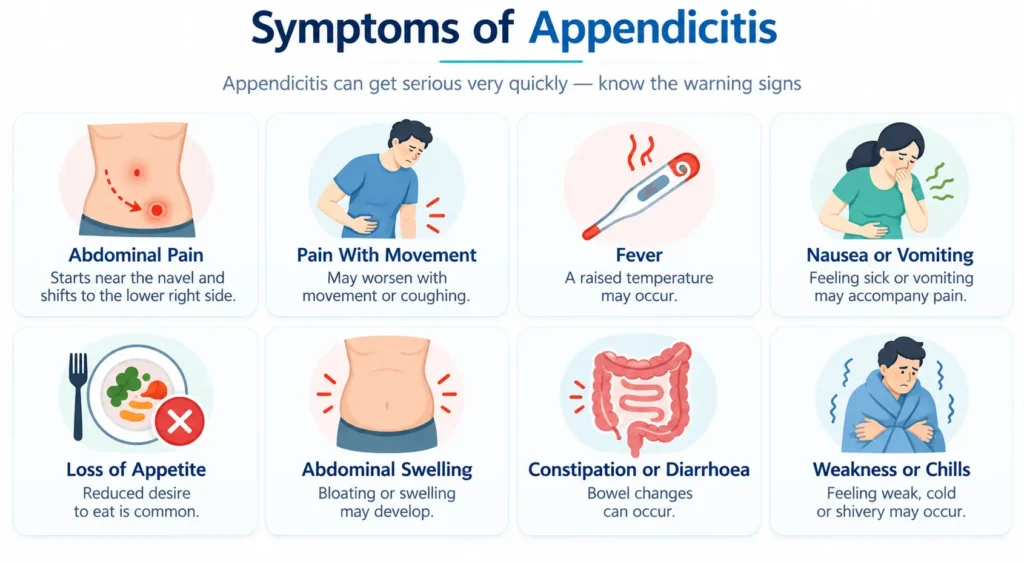
The symptoms of appendicitis can vary from person to person, particularly in children, older adults and pregnant women. The most common symptom is abdominal pain that may become progressively worse.
Common appendicitis symptoms include:
- Pain around the belly button that may move towards the lower right abdomen
- Increasing or persistent abdominal pain
- Tenderness in the abdomen
- Loss of appetite
- Nausea or vomiting
- Fever
- Abdominal swelling or discomfort
- Constipation or diarrhoea in some people
- Difficulty passing gas in some cases
Not everyone experiences all of these symptoms. Early appendicitis may initially resemble indigestion, stomach infection or other causes of abdominal pain.
Where Is Appendix Pain Located?
Appendix pain is commonly felt in the lower right side of the abdomen, although the location can vary depending on the position of the appendix and the stage of inflammation.
Pain may initially begin around the belly button and gradually become more focused in the lower right abdomen. It may become worse with movement, coughing or pressure.
What Does Appendicitis Pain Feel Like?
Appendicitis pain may initially feel like a vague or dull discomfort around the belly button. As inflammation progresses, the pain may become sharper, more constant and concentrated in the lower right abdomen.
What Causes Appendicitis?
The exact cause of appendicitis can vary, but it commonly develops when the opening of the appendix becomes blocked. This can allow bacteria to multiply inside the appendix and cause inflammation.
Possible causes of appendicitis include:
- Blockage by hardened stool or a faecalith
- Swelling of lymphoid tissue following an infection
- Inflammation within the appendix
- Gastrointestinal infections
- Less commonly, growths or other blockages
What Are the Different Types or Stages of Appendicitis?
Appendicitis can be broadly classified into acute and chronic or recurrent appendicitis. It can also progress through different stages as inflammation becomes more severe.
Types of Appendicitis
- Acute Appendicitis
Acute appendicitis develops suddenly and usually causes increasing abdominal pain, nausea, vomiting and fever. - Chronic or Recurrent Appendicitis
This is less common and may cause milder or intermittent abdominal pain that comes and goes.
Stages of Appendicitis
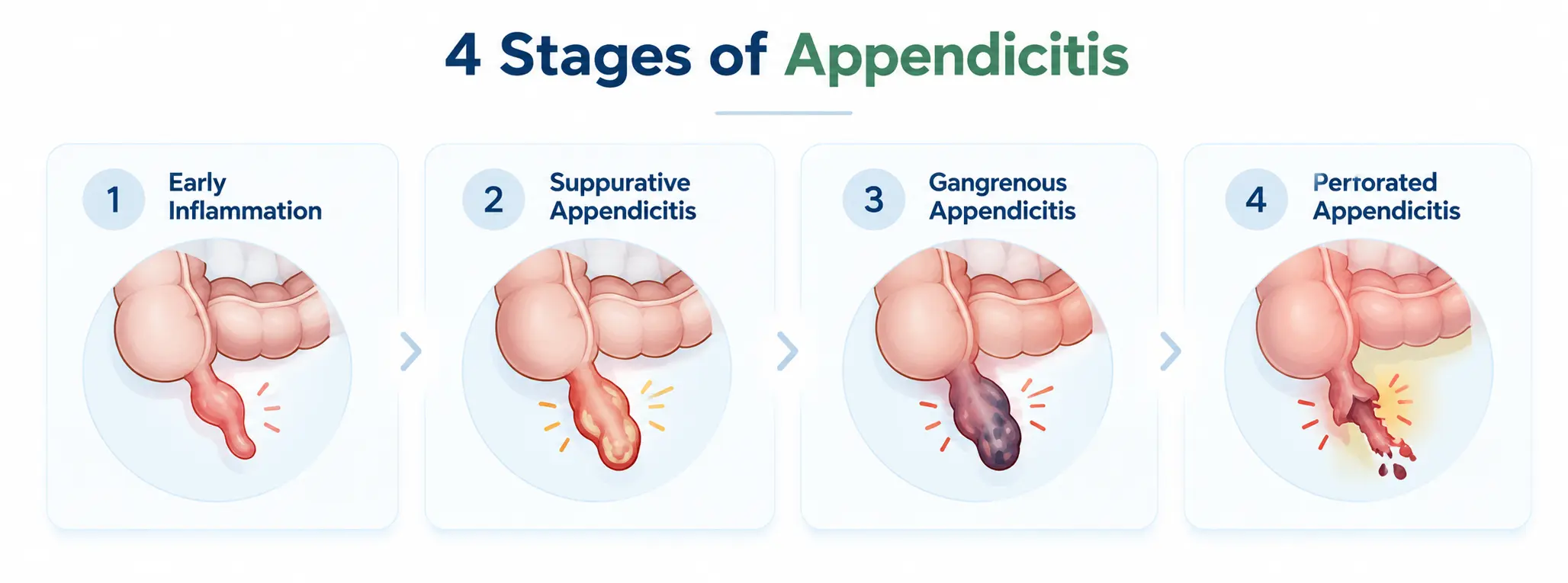
Important: Illustration for educational purposes only. It does not represent the exact appearance or progression of appendicitis in every patient.
- Early Inflammation
The appendix becomes swollen and inflamed. Pain may initially start around the belly button and gradually move towards the lower right abdomen. - Suppurative Appendicitis
Inflammation becomes more severe and pus may build up inside the appendix. Pain, fever, nausea and vomiting may become more noticeable. - Gangrenous Appendicitis
Increasing pressure and inflammation can reduce the blood supply to the appendix, causing its tissue to become damaged or die. The risk of rupture increases at this stage. - Perforated Appendicitis
The appendix develops a hole or ruptures, allowing infection to spread into the abdominal cavity. This can cause peritonitis, an abscess or serious infection, and requires urgent medical treatment.
How Is Appendicitis Diagnosed?
Diagnosis of appendicitis is done using your symptoms, medical history, physical examination, and, when needed, blood tests or imaging.
Tests for Appendicitis May Include:
- Physical examination:
The doctor checks for abdominal tenderness and other signs associated with appendicitis. - Blood tests:
A raised white blood cell count or other inflammatory markers may support the diagnosis, although blood tests alone cannot confirm appendicitis. - Urine testing:
Urine tests may help rule out urinary tract infections or kidney-related causes of abdominal pain. - Ultrasound:
Ultrasound may be useful in selected patients, particularly children and pregnant women. - CT scan:
A CT scan can provide detailed images of the appendix and surrounding tissues and may be recommended when the diagnosis is uncertain or complications are suspected.
What Is the Treatment for Appendicitis?
Appendicitis treatment depends on the severity of inflammation, whether complications are present and the patient’s overall condition.
Treatment options may include antibiotics, observation in selected cases or surgery to remove the appendix.
- Non-Surgical Treatment
Some patients with appendicitis may be considered for antibiotic-based treatment under close medical supervision.
However, antibiotics are not appropriate for every patient. The risk of recurrence needs to be considered when deciding between non-operative and surgical management.
- Appendicitis Treatment With Surgery
For many patients, particularly those with persistent symptoms, worsening inflammation or complicated appendicitis, appendectomy surgical removal of the appendix is the definitive treatment.
Surgery may be recommended when there is progressive or severe appendicitis, appendix rupture or recurrent appendicitis.
When Is Appendix Surgery Needed?
Appendix surgery, or appendectomy, may be recommended when the appendix is inflamed or when there is a risk of appendix rupture
Depending on the patient’s condition, surgery may be performed using a minimally invasive laparoscopic approach or, in certain situations, an open approach.
For detailed information about the procedure, preparation, recovery and potential risks, see our dedicated page on Appendectomy in Delhi.
What Happens If Appendicitis Is Left Untreated?
Untreated appendicitis can become more serious as inflammation progresses.
Possible complications include:
- Ruptured or Perforated Appendix
A severely inflamed appendix can develop a hole or rupture. This can allow infected material to spread into the abdominal cavity.
- Appendicular Abscess
An abscess may form around the appendix when the body attempts to contain the infection.
- Peritonitis
If infection spreads throughout the abdominal cavity, it can cause peritonitis, a serious condition requiring urgent treatment.
- Sepsis
A severe infection can potentially spread into the bloodstream and lead to sepsis.
What Is Recovery Like After Appendix Surgery?
Recovery after appendectomy depends on the type of surgery, the severity of appendicitis and whether complications were present.
Recovery generally involves:
- Gradual return to normal eating
- Walking as advised by the surgical team
- Keeping the incision sites clean and dry
- Taking prescribed medicines as directed
- Avoiding strenuous activity until advised
- Attending follow-up appointments
Appendicitis Treatment in Delhi NCR
If you are experiencing symptoms that may indicate appendicitis, getting an accurate diagnosis is the first step towards appropriate treatment.
In Delhi NCR, treatment may involve evaluation by a gastrointestinal or laparoscopic surgeon, diagnostic testing and a personalised treatment plan based on the severity of the condition.
Dr. Deep Goel specialises in gastrointestinal and laparoscopic surgery and evaluates patients with conditions that may require surgical treatment. When appendectomy is indicated, laparoscopic surgery may be considered.
The treatment approach is selected based on the patient’s symptoms, diagnostic findings, overall health and whether complications are present.
Why Consult Dr. Deep Goel for Appendicitis Treatment in Delhi NCR?
Dr. Deep Goel is a Senior Gastrointestinal, Laparoscopic and Bariatric Surgeon at BLK-Max Super Speciality Hospital, New Delhi, with more than 27 years of surgical experience and over 20,000 GI surgeries performed. His expertise includes advanced gastrointestinal and minimally invasive surgery, making him an experienced specialist for evaluating abdominal conditions that require surgical treatment.
For patients with suspected appendicitis, Dr. Goel evaluates the symptoms, clinical findings and diagnostic reports to determine the appropriate treatment. When appendectomy is required, a laparoscopic approach may be considered when clinically suitable, with the choice of surgery based on the severity of appendicitis and the patient’s individual condition.
His extensive training in Minimal Access, GI and Bariatric Surgery at Mount Sinai Medical School, New York, and Surgical Gastro-Oncology, Laparoscopic and Bariatric Surgery in France, along with fellowship training at the Royal College of Surgeons of England, supports his expertise in advanced minimally invasive gastrointestinal surgery..
Final Thoughts
Appendicitis can start with what feels like an ordinary stomach ache, but the pain can become more severe as inflammation progresses. Not every episode of abdominal pain is appendicitis, and the symptoms can vary from one person to another. What matters is recognising when pain is persistent or getting worse and seeking medical advice rather than waiting for it to settle on its own.
With timely evaluation, appendicitis can usually be diagnosed and treated effectively. The right approach depends on the severity of inflammation, your symptoms, test results and whether any complications have developed. When surgery is needed, laparoscopic appendectomy may be considered where appropriate.
Experiencing persistent abdominal pain or symptoms of appendicitis? Consult Dr. Deep Goel for an evaluation and personalised treatment plan.
Frequently Asked Questions
What are the first symptoms of appendicitis? expand_more
The first symptoms may include abdominal discomfort or pain around the belly button, loss of appetite, nausea and mild fever. The pain may later become more severe and move towards the lower right side of the abdomen.
Where is appendix pain located? expand_more
Appendix pain commonly occurs in the lower right abdomen. It may initially begin around the belly button before becoming more localised. However, pain location can vary, so diagnosis should not be based on location alone.
When does appendicitis require surgery? expand_more
Appendectomy may be recommended when there is significant inflammation, worsening symptoms, perforation, rupture, abscess formation or other complications. The decision is made after clinical assessment and investigations.
What happens if the appendix bursts? expand_more
A ruptured appendix can release infected material into the abdomen and may lead to an abscess, peritonitis or severe infection. A ruptured appendix requires urgent medical treatment.
Can you live normally after appendix removal? expand_more
Yes. Most people can return to normal daily life after appendix removal and do not need permanent dietary restrictions because the appendix is not essential for normal digestion.

Dr. Deep Goel’s Medical Content Team
Dr. Deep Goel’s medical content team specialises in creating accurate, clear, and patient-focused healthcare content. With strong clinical understanding and expertise in technical writing and SEO, the team translates complex medical information into reliable, accessible resources that support informed decisions and uphold Dr. Goel’s commitment to quality care.
This content is reviewed by Dr. Deep Goel
Related Blogs

लेप्रोस्कोपिक सर्जरी (Laparoscopic Surgery) क्या है? फायदे, प्रक्रिया, खर्च और रिकवरी की पूरी जानकारी
क्या आपके डॉक्टर ने आपको लेप्रोस्कोपिक सर्जरी (Laparoscopic Surgery) कराने की सलाह दी है? यदि…
Read Article → WhatsApp